
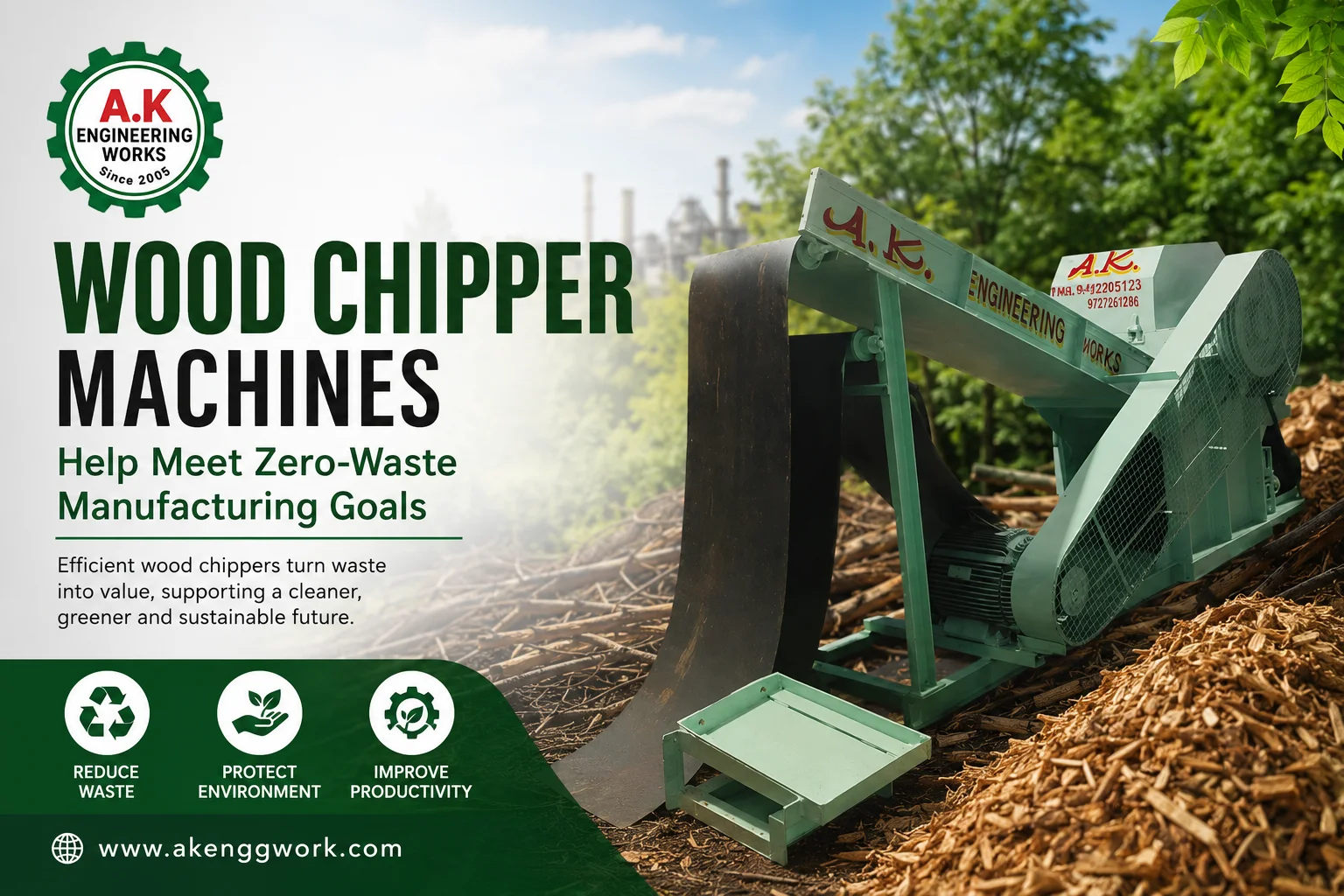
Manufacturing industries are under increasing pressure to reduce waste without affecting productivity. For businesses that work with timber, pallets, furniture, plywood, or packaging materials, wood waste is becoming unavoidable. The challenge is not the waste itself but how to manage it in the right way. But thanks to the wood chipper machine manufacturers, who have provided us with the right tool to deal with wood waste efficiently. Instead of sending leftover wood for disposal, industries can now convert it into a reusable resource. This shift is helping meet zero-waste manufacturing goals with ease. Let’s know how the wood chipper machine is contributing towards it.
Waste is turned into a valuable resource
Every production unit generates wood offcuts, branches, damaged pallets, and scrap pieces. When these materials are processed through a wood chipper machine, they are converted into uniform wood chips suitable for biomass fuel, composting, particle board production, paper manufacturing, and landscaping.
This simple process ensures that materials which once required disposal now contribute to another manufacturing cycle, reducing overall waste generation.
Lowers disposal cost and promotes cleaner workspaces
Unprocessed wood waste occupies valuable floor space and increases handling expenses. Regular transportation and disposal also add to operating costs. But by buying reliable wood chipper machine, it becomes easier to reduce bulky waste into manageable chips. They are easier to collect, store, and transport. As a result, production areas remain organized, workers can move safely, and businesses spend less on waste management. But to ensure that you wood chipping machine offer all these benefits, always buy from certified wood chipper machine manufacturers.
Supporting zero-waste manufacturing goals
Zero-waste manufacturing focuses on making the best possible use of available resources. Wood chipper machines support this objective by ensuring that wooden waste is recycled instead of discarded. Industries can reuse the processed material internally or supply it to businesses that require wood chips as raw material. This not only reduces landfill waste but also promotes responsible resource utilization without compromising production output.
Improved productivity with continuous operation
Manual disposal of wood waste consumes valuable labor and production time. A high-performance wood chipper machine automates this task, allowing continuous processing alongside regular manufacturing activities. Less downtime for waste handling means employees can focus on production while the facility maintains a cleaner and more efficient workflow. This balance between productivity and waste management makes the investment worthwhile for businesses of all sizes.
Conclusion
Zero-waste manufacturing is becoming a practical business strategy rather than an environmental initiative. By converting wood waste into reusable material, industries can reduce disposal costs, optimize available space, improve operational efficiency, and create additional value from production waste. We at A.K. Engineering Works, being one of the reliable wood chipper machine manufacturers, ensure that businesses invest in machines that are designed to process different types of wood waste efficiently while delivering consistent performance to meet waste reduction goals.
FAQs – Frequently Asked Questions
Furniture manufacturers, sawmills, plywood units, biomass plants, packaging companies, and timber processing industries regularly use wood chipper machines.
It can process wood logs, branches, pallets, offcuts, wooden packaging waste, and other timber scraps, depending on machine capacity.
They convert wood waste into reusable chips, reducing landfill disposal and supporting efficient resource utilization.
Look for processing capacity, blade quality, power efficiency, maintenance requirements, safety features, and reliable after-sales support.